Senior Researcher · ETH Zürich

AI systems.
Built for humans.

I turn insights about human behaviour into AI systems people can use. From digital parenting support to city-scale simulation, I build the software and test the ideas.

Scientist · Data Scientist · AI & ML Engineer

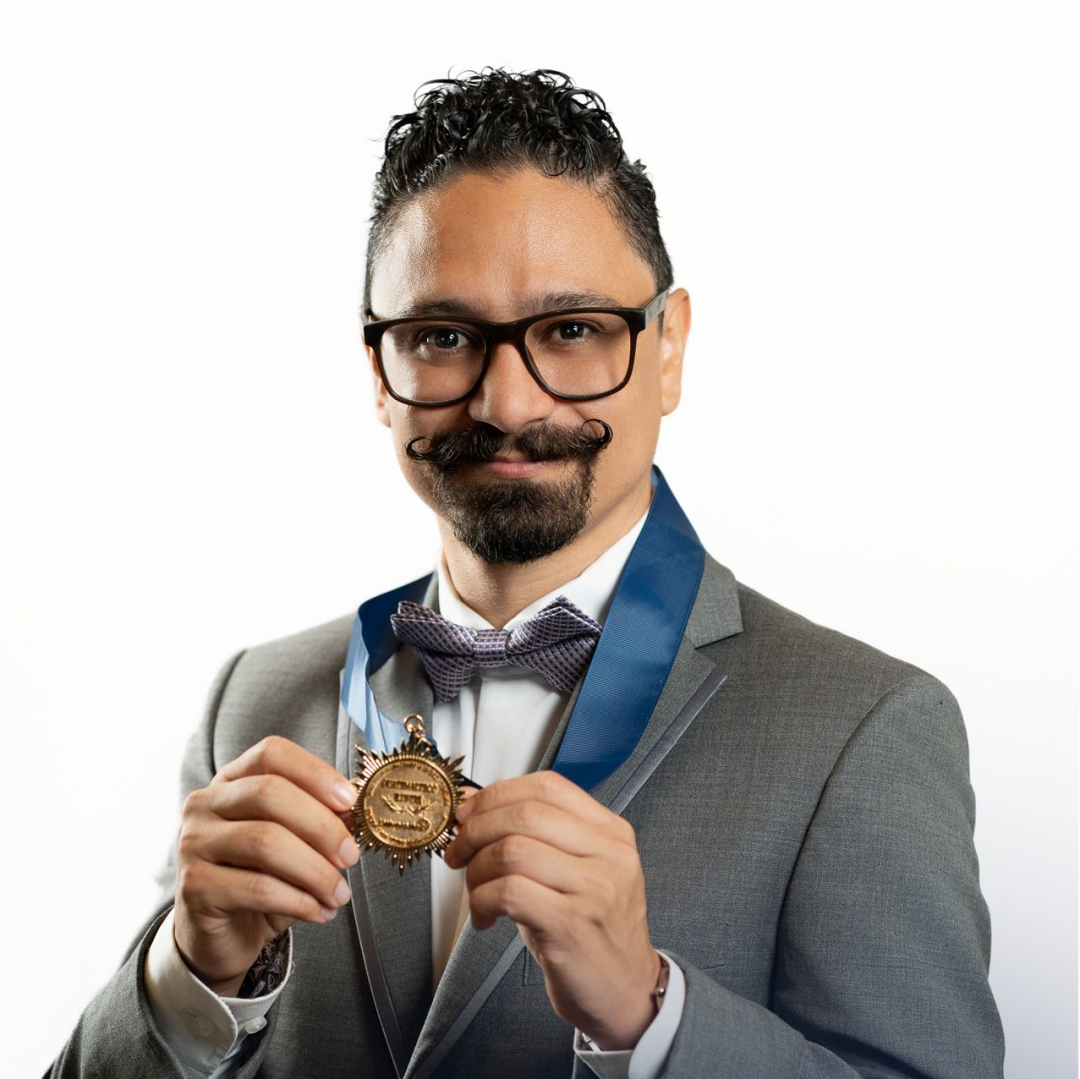
MIT Technology Review
Innovator Under 35 · Latin America 2019
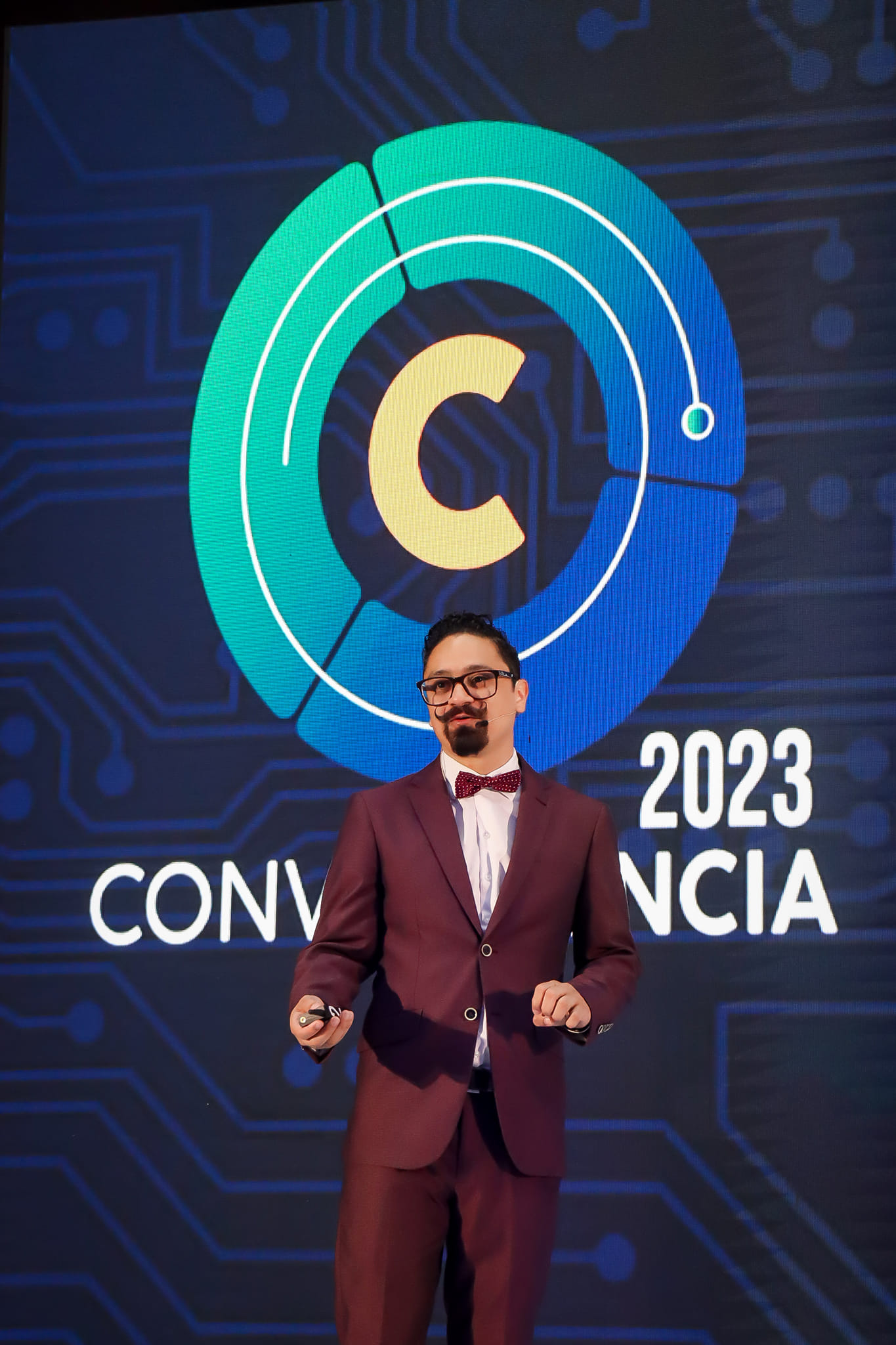
Leonel Aguilar speaking at Converciencia 2023
Leonel Aguilar Converciencia · Guatemala, 2023

Selected work

From human behaviour
to working systems.

Explore the research

NeurIPS 2026 · Accepted poster

What makes AI extrapolate?

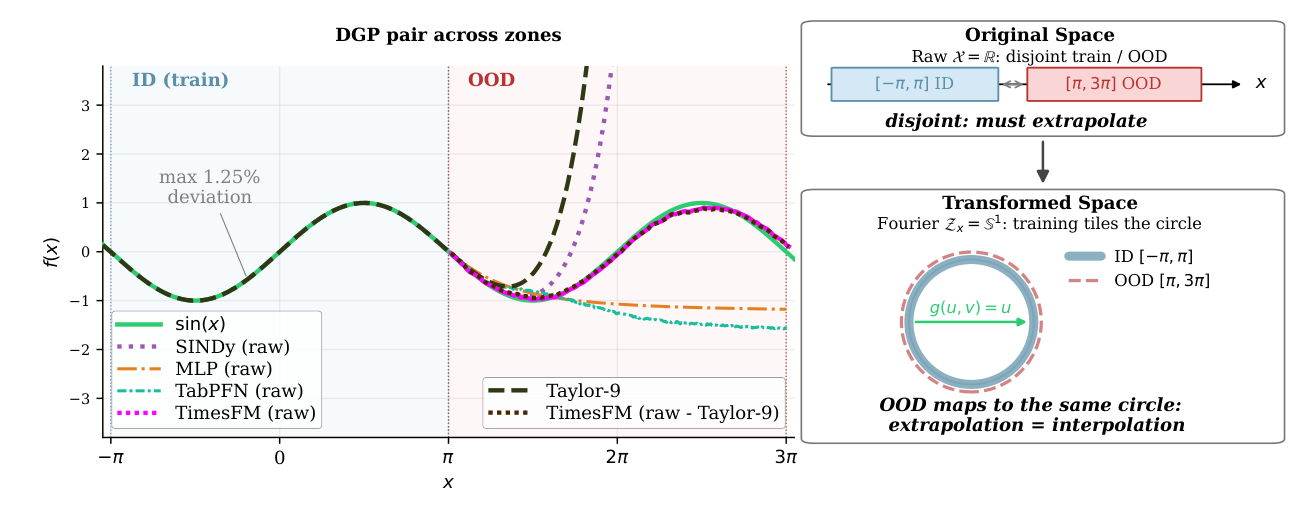
Models that fit the same training data can behave very differently outside it. This paper examines how feature representations encode assumptions about the process that generated the data, and why those assumptions matter for extrapolation. Correct features alone are insufficient: the model must express the target, and training data must cover the relevant representation space.
Explore the paper NeurIPS presentation
Comparison of raw-space extrapolation with Fourier features that map training and unseen inputs onto the same circle.
Aguilar et al., arXiv:2605.07483v2, Figure 1. Cropped from PDF page 2. CC BY 4.0.
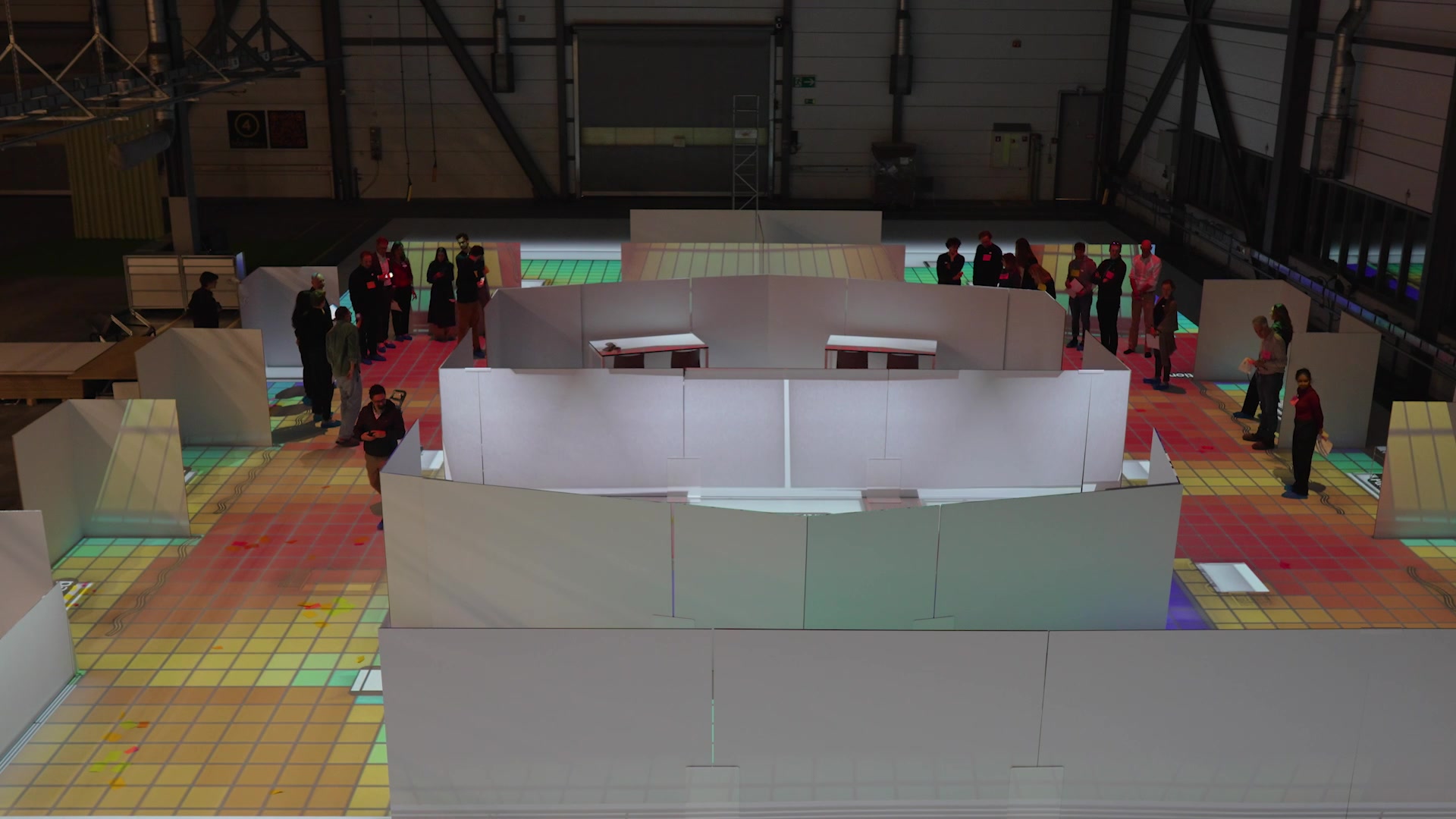
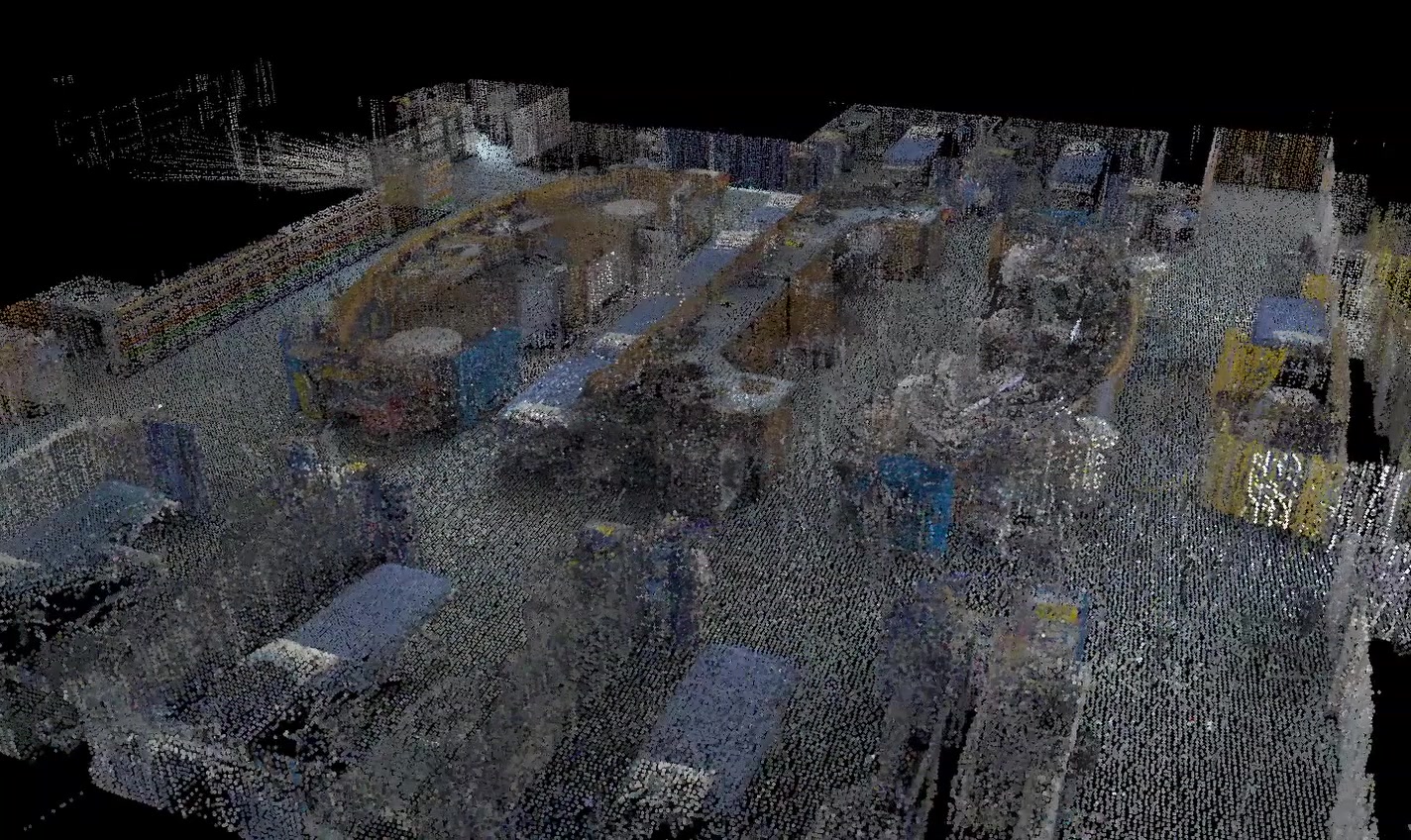
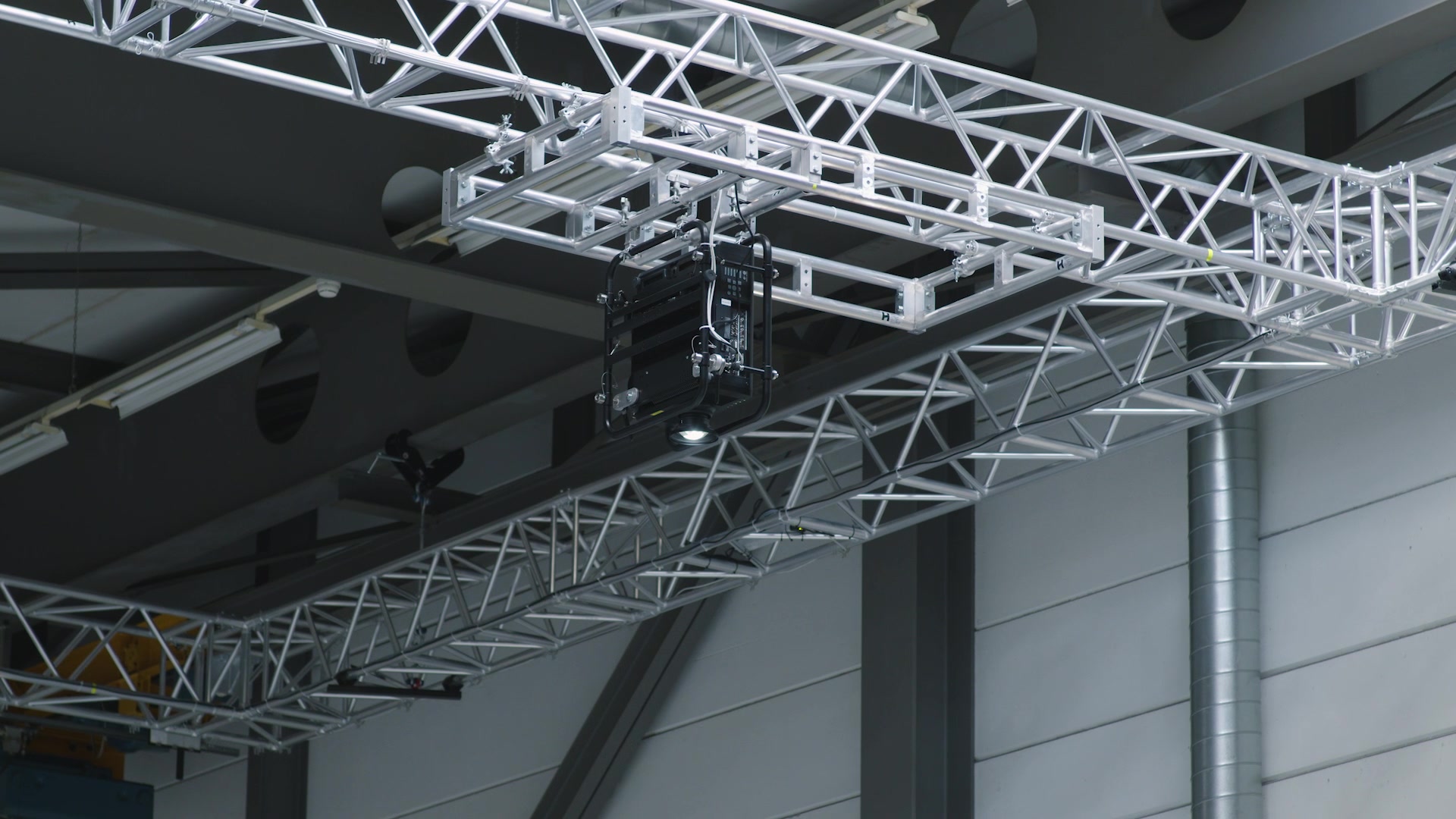
Coloured floor projection across the clinical layout at the Nidau co-design sessionOblique view of an emergency department captured as a LiDAR point cloudOverhead projector suspended from the support rig at the Nidau experiment setup
Nidau co-design setup, LiDAR point cloud and projection equipment. Nidau video by iART ag, in collaboration with SCDH.

Current collaboration

EVIDENT

Project partner · 2025–2029

EVIDENT studies how emergency-department layouts shape staff interactions, teamwork and patient care. I’m a project partner in this SNSF-funded collaboration involving ETH Zürich, the University of Cambridge and Northumbria University.

SNSF grant & project partners Cambridge project overview

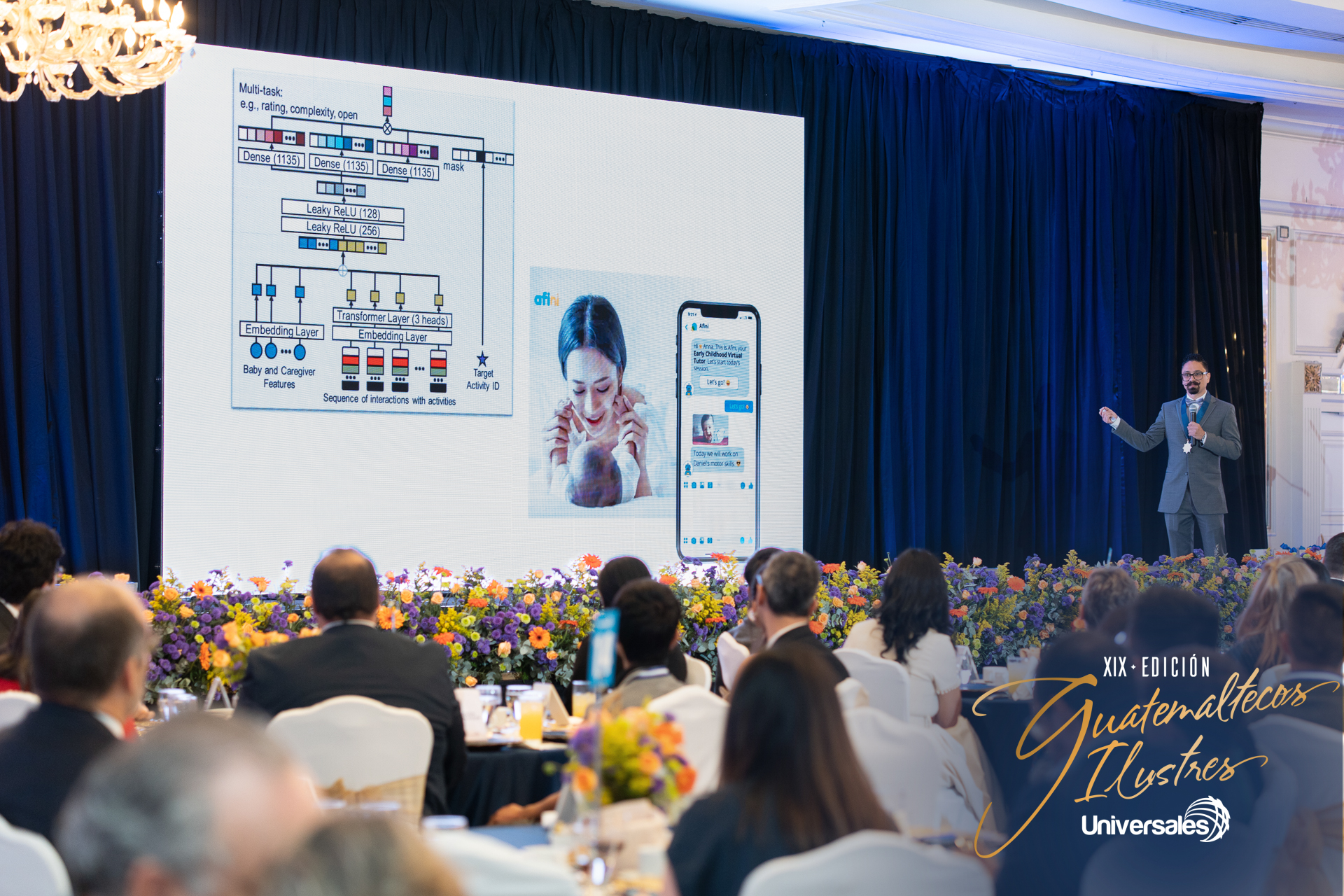
Recognition & public speaking

Ideas that reach beyond the lab.

A connected research agenda

Understand people.
Build for them.

01

Understand people

How do people perceive, navigate and decide? Behavioural experiments and virtual reality make these questions measurable.

Human behaviour
02

Build intelligent systems

I develop learning systems and study what makes their predictions generalize beyond the training data.

AI and generalization
03

Evaluate in practice

Behavioural experiments, field trials and simulation connect technical performance to how systems work for people.

Systems in practice

More research

Experiments, behaviour
and machine learning.

All publications
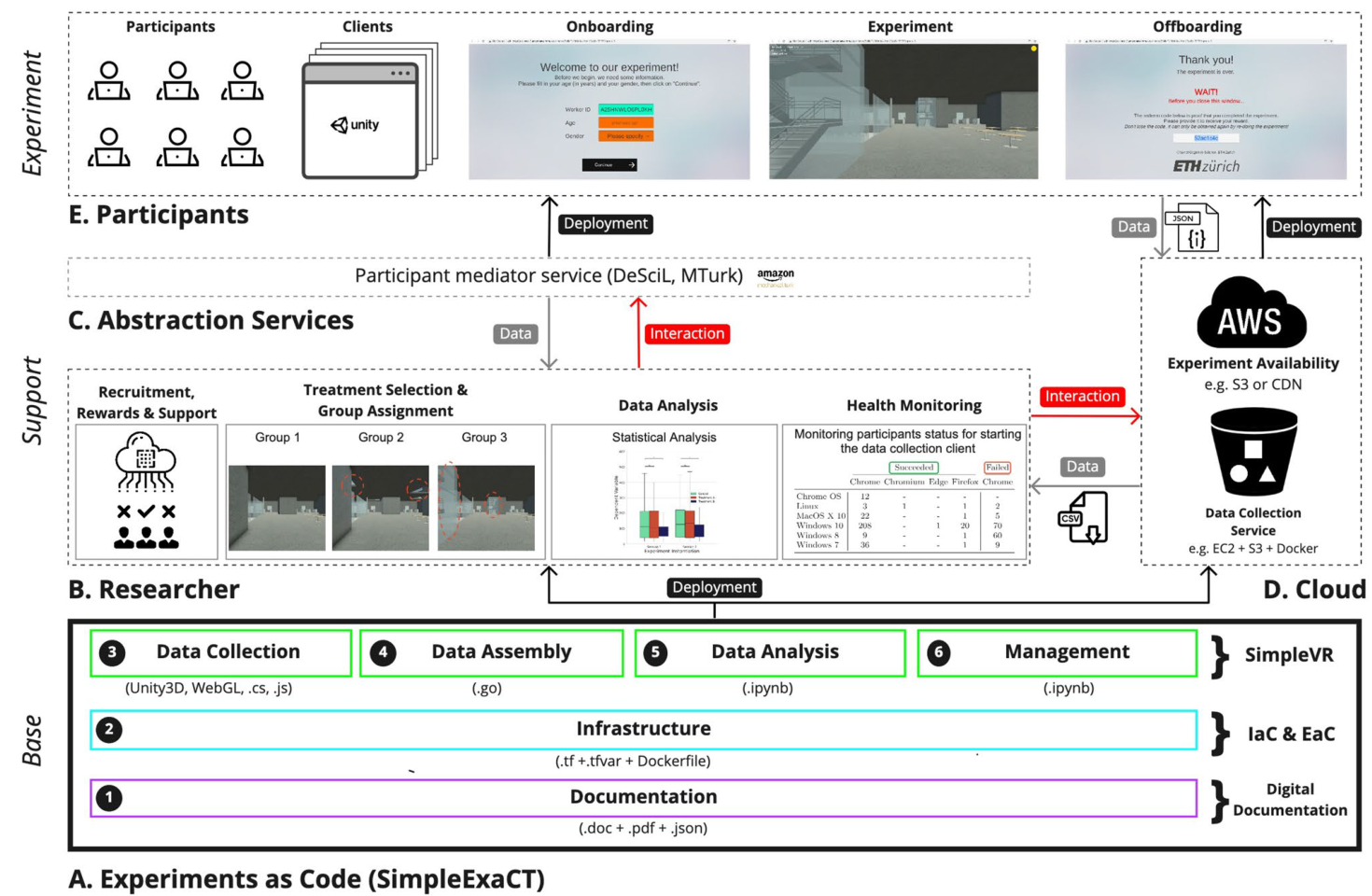
Experiments as Code architecture linking documentation and software to cloud services, researchers, and participants in a browser-based virtual experiment.

Human behaviour · 2024

Experiments as Code

Experiments as Code packages documentation, software, infrastructure and analysis into an executable research workflow. The paper demonstrates this approach with browser-based virtual-reality wayfinding experiments and two complete deployments. It provides a way to inspect, debug and reuse an experimental setup. The evidence comes from a specific implementation and case study, with reproducibility assessed for its stated wayfinding result.

Read the research

Figure 5 · Original paper · CC BY 4.0 · Cropped

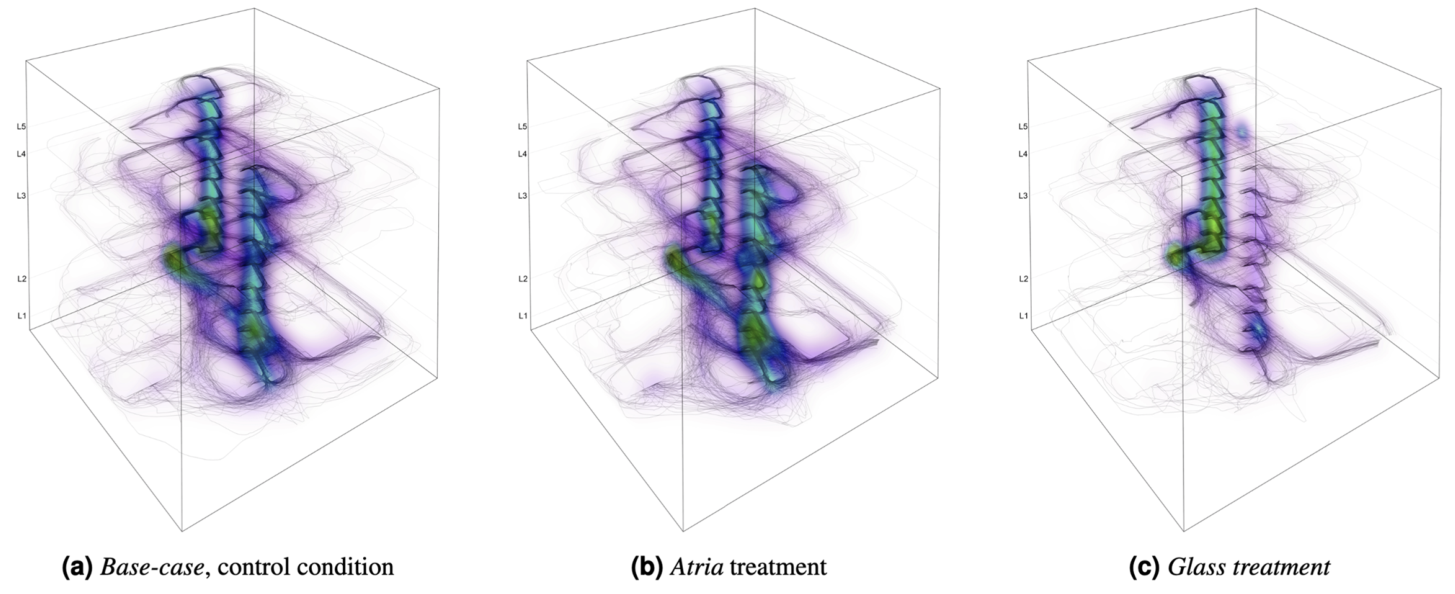
Three-dimensional path-density views compare the base building, added atria and transparent staircase conditions; paths concentrate near the staircase in the glass condition.

Human behaviour · 2024

How visibility shapes wayfinding

What people can see changes how they search a building. This study reanalyses six wayfinding tasks completed by 149 participants in virtual multilevel buildings. Visibility of useful features, such as staircases, interacted with expectations about destinations to shape routes and search efficiency. The findings come from desktop virtual reality, where movement and distance perception differ from physical navigation.

Read the research

Figure 4 · Original paper · CC BY 4.0 · Cropped

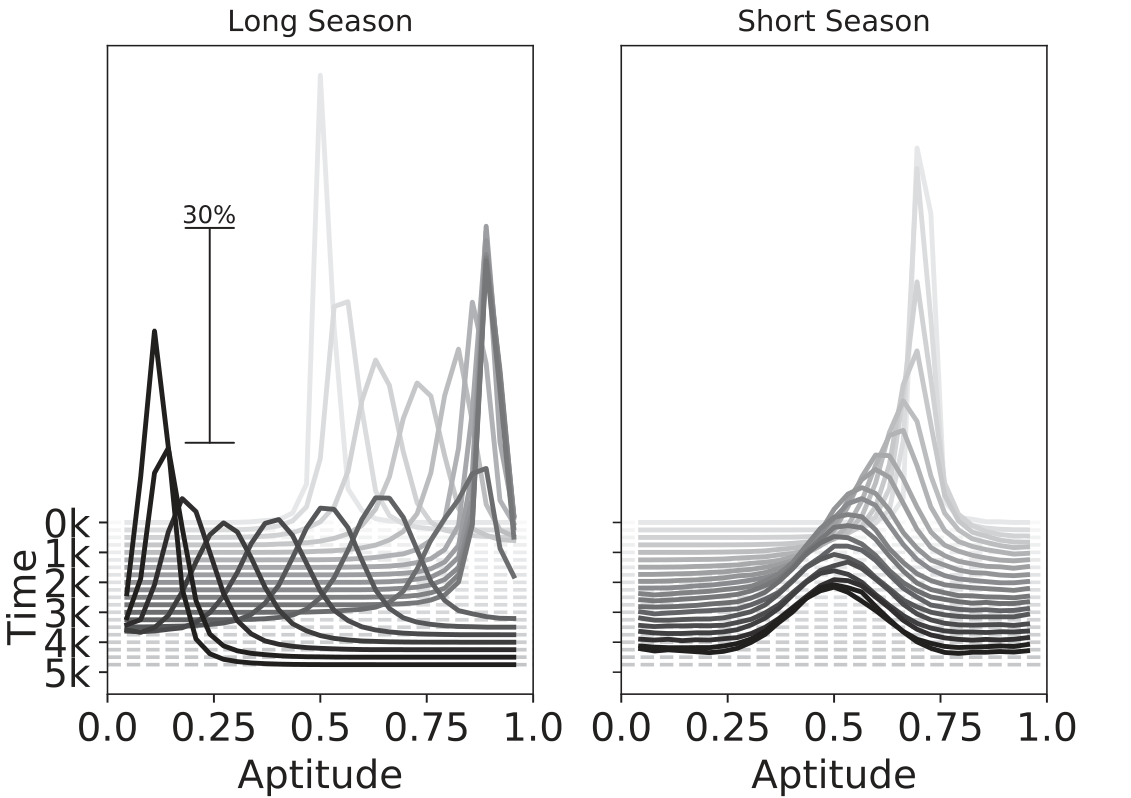
Aptitude distributions across simulation time compare long and short seasons; the short-season distribution concentrates near intermediate inherited aptitude.

AI and generalization · 2019

When learning redirects evolution

Learning can change which inherited traits evolve, as well as how quickly they spread. Using simulated foraging agents and a mathematical model, this paper studies environments where food availability changes in cycles. Rapid change can favour an inherited generalist starting point even when individuals learn specialised behaviour. These are results from an abstract model, not observations of biological evolution.

Read the research

Figure 2 · Original paper · CC BY 4.0 · Cropped

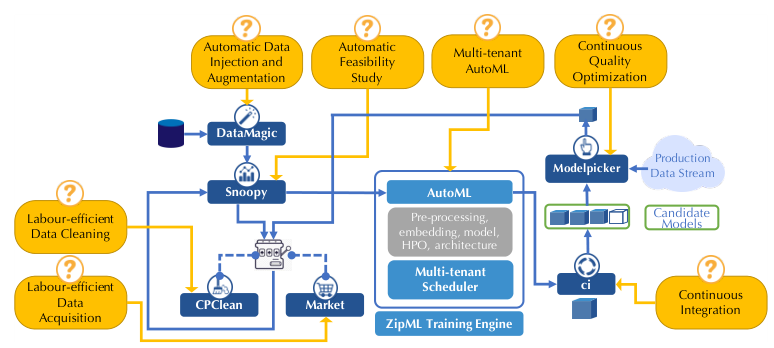
Ease.ML workflow links automatic data preparation, feasibility analysis, data cleaning and acquisition, model training, testing and production model selection.

Systems in practice · 2021

Guiding the machine-learning lifecycle

Ease.ML organises machine-learning development into an eight-step process for domain experts with limited ML experience. The prototype connects data preparation, feasibility checks, model training and ongoing quality control, with people involved where their input is needed. It focuses on managing the whole workflow. The paper also identifies limitations, including its emphasis on prediction accuracy rather than fairness or explainability.

Read the research

Figure 1 · Original paper · CC BY 3.0 · Cropped

Teaching at ETH Zürich

The human side
of intelligent systems.

Full teaching record

I teach at the intersection of human–computer interaction, user experience, cognition and AI’s role in society.

Let’s connect

Let’s build AI for people.

My work brings together AI systems and an understanding of people.